Building Offline-First React Native Apps: For Enterprises
An in-depth enterprise guide exploring building offline-first react native apps. We examine core architectural decisions, data integration pipelines, scaling bottlenecks, and production-grade implementation strategies.
Rituraj Sharma
Chief Design Officer
Introduction: The Strategic Context of Building Offline-First React Native Apps
The digital storefront is the primary point of contact between a modern enterprise and its users. On the web and on mobile, user expectations have never been higher: interfaces must load instantly, respond to touch immediately, and deliver a seamless experience across devices. Achieving this level of quality requires a frontend architecture that balances visual design with performance optimization. Historically, frontend development was viewed as simple styling and layout assembly. Today, it is a complex engineering discipline involving state synchronization, client-side caching, bundle optimization, and network layer design. Building an exceptional user experience means treating performance as a core feature and optimizing the client-side rendering pipeline.
Core Architectural Principles
A key metric for web performance is Core Web Vitals, which measures loading speed, interactivity, and visual stability. Leveraging modern frameworks like Next.js allows developers to choose the best rendering strategy for each page. Static Site Generation (SSG) provides instant loading for static pages, while Server-Side Rendering (SSR) ensures dynamic content is rendered fresh, optimized for search engines. On mobile, cross-platform frameworks like React Native and Flutter have changed the landscape. By allowing teams to write a single codebase that runs on both iOS and Android, these frameworks accelerate feature delivery. However, achieving native-like 60fps performance requires a deep understanding of the framework's bridge architecture, ensuring heavy computations are offloaded to background threads.
Deep Dive Implementation Details
At the browser layer, optimizing the critical rendering path is essential. This involves minifying and splitting JavaScript bundles to ensure the browser only downloads the code needed for the initial screen. Implementing lazy loading, optimizing font delivery, and using responsive, modern image formats (like AVIF or WebP) significantly reduces page weight and speeds up Largest Contentful Paint (LCP). State management is another core architectural decision. Choosing between React Context, Redux, and lightweight stores like Zustand impacts render performance and codebase complexity. While Context is built-in, it can trigger unnecessary re-renders in large components. Adopting selector-based state libraries ensures that only the components that depend on specific state changes will re-render, keeping the UI snappy.
Critical Scaling Bottlenecks
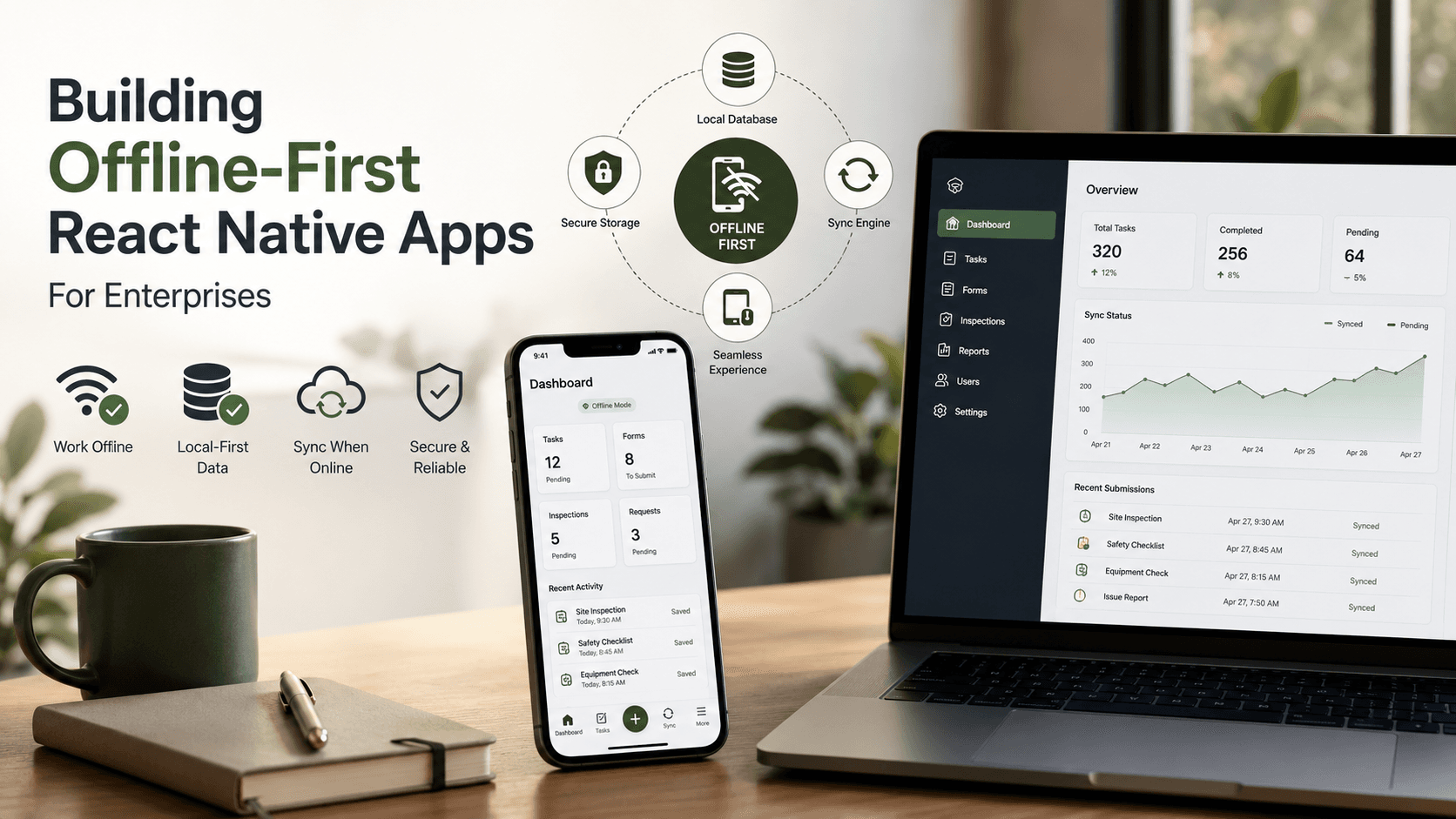
A common bottleneck in frontend applications is network latency from inefficient data fetching. Over-fetching data leads to bloated payloads and slow processing. Using GraphQL or JSON:API allows the client to request only the fields they need. Additionally, implementing optimistic UI updates—where the client immediately displays success before the server responds—makes the application feel instant. On mobile, local storage and caching play a vital role in performance. When network connectivity is poor, applications must remain functional. Utilizing local databases (such as SQLite or Realm) and offline sync engines ensures that user actions are recorded locally and synchronized with the backend server once connectivity is restored, providing a seamless offline-first experience.
Security, Trust & Compliance
Frontend security involves protecting user data and preventing client-side exploits. Cross-Site Scripting (XSS) is a major threat, where malicious scripts are injected into web pages. Developers must sanitize all inputs, encode outputs, and enforce strict Content Security Policies (CSP) to restrict where scripts can be loaded from. Authentication flow design is another critical security area. Storing authentication tokens in insecure locations, like localStorage, exposes them to extraction via XSS. Implementing secure, HttpOnly, SameSite cookies for session management prevents token theft. On mobile, leveraging secure hardware storage (such as iOS Keychain or Android Keystore) ensures sensitive user credentials remain encrypted.
Performance Benchmarking & Telemetry
To maintain performance over time, teams should integrate automated performance budgeting into their build pipelines. Tools like Lighthouse CI can run audits on every pull request, alerting developers if a change increases bundle size or degrades loading metrics. This prevents performance degradation from creeping into the production build. Real User Monitoring (RUM) is also essential for capturing performance in the wild. RUM tools collect real-time speed metrics from actual users' browsers and devices. This data helps identify performance degradation that might occur only on specific low-end devices or in regions with poor network conditions, allowing the team to optimize target layouts in a data-driven way.
Summary & Operational Takeaways
To conclude, delivering a premium frontend experience is a process of continuous optimization. By combining modern rendering strategies, bundle optimization, secure state management, and real user monitoring, teams can build web and mobile interfaces that load instantly, run smoothly, and convert visitors into loyal customers.
Written by
Rituraj Sharma
Chief Design Officer
Rituraj Sharma writes about engineering, design, and AI at Magnence — sharing lessons learned from shipping production systems for clients across 13+ industries.